The Fear Of Censorship

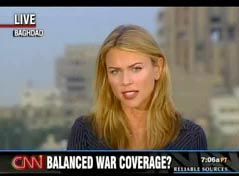
John Roberts has been CNN’s senior national correspondent and its anchor of the awkwardly-named This Week at War (sounds like a VH1 Top 20 Countdown). He was recently named a new co-host of CNN’s American Morning. In his former position at CBS he served as the network’s White House correspondent and was embedded with Marines during the invasion of Iraq. Now, in an interview with Broadcasting & Cable, this experienced and connected professional speaks out about the handling of the coverage of the war in Iraq and, despite his participation, he has some rather unflattering critiques of what transpired.

In the article, Roberts concedes that the media was unprepared to properly cover events on the ground and should have been more vigilant in the run-up to the war. But by far the more notable observation that Roberts imparts is one that reflects on current coverage:

“If we showed people the full extent of what we see every day in Iraq, we would either have no one watching us because they couldn’t stand to see the pictures, or we would get so many letters of complaint that some organization would come down on us to stop.”

With current polls showing that two thirds of the American public are already opposed to the war in Iraq, the notion that we have not yet reached the nadir of our disapproval is somewhat unsettling. Especially if the reason is that, as Roberts contends, the “full extent” of what the press sees every day has been withheld from us by a media establishment that is afraid of mail and of losing viewers. And I get no consolation from Roberts’ informing me that things are much worse than I ever imagined.

Indeed, the pictures that are presently darkening our TV screens with bloodshed, blasts, and blackened smoke, are enough to sow depression in the most optimistic amongst us. But that is not sufficient reason for responsible journalists to soft-peddle even a harsh reality. In an open democratic society, citizens need to be fully informed because, contrary to the monarchal delusions of President Bush, we are the deciders. If exposure to the truth produces more dissatisfaction, it is not up to editors and programmers to shield us from our own tender sensitivities. That is not the way to cultivate an informed electorate. That is not the way to promote Democracy.

The public’s appetite for this war has steadily declined over the past four years and would likely have declined further and faster had the news been presented impartially and honestly. In fact, we might never have gone to war in the first place if the vigilance of which Roberts spoke had been practiced at the outset by a conscientious and ethical press corps.

There are two problems (at least) with Roberts’ statement above. One is that he gives too much weight to the notion that Americans don’t have the stomach to manage the nation as our Constitution requires. The other is that his fear that “some organization” would put a stop to honest, unfettered reporting, resulted in that fear becoming manifest. The fear of censorship produced censorship and the people were deprived of knowledge. The only organization that profited from this suppression is an administration that was predisposed to execute a war of aggression and preferred to avoid the pesky interference of the will of the people.

To paraphrase Roberts:

If we, the people, show the full extent of what we see and feel every day about Iraq, they would know that we are watching, and they would get so many letters of complaint that our organization of citizens would come down on them to stop suppressing the truth; stop embracing unscrupulous pseudo-leaders; and stop this god-awful war.

This practice of Nanny Journalism is all too common in American media. They think we can’t handle the truth. But it’s funny (by which I mean pathetic) that they keep coming back after the fact to confess their mea culpas.

CBS: Let Lara Logan Do Her Job

CBS News is fortunate to have one of the most dedicated and responsible reporters in broadcast journalism. But they apparently don’t appreciate it.
Lara Logan has been posting honest and courageous reports from Baghdad since before the fall of Saddam. Her latest, though, has been shuffled off to CBS’ web site without being broadcast on the network. If you see the piece, you might understand why it was treated this way. In addition to contradicting much of the administration’s delusional assertions of success, the story is accompanied by images of the brutal reality of life on the streets of Baghdad. Now she needs our help to get this on the air.

CBS has taken it upon themselves to decide that America “can’t handle the truth.” But as Ms. Logan herself says in a letter to MediaChannel:

“…this is not too gruesome to air, but rather too important to ignore.”

The letter also called for supporters to let CBS know that they are interested in these stories and that they want them to air. Here’s the email for the CBS Evening News.

For a little more background on Lara Logan, click more.

Contine reading

Death Of A Prez Ads Nixed By CNN, NPR

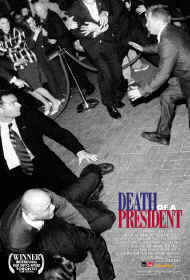
Death of a President is a new film that has been generating both controversy and acclaim. It is the winner of the International Critics’ Award from the Toronto Film Festival. The film’s web site describes it as…

“a fictional TV documentary broadcast in 2008, reflecting on another monstrously despicable and cataclysmic event: the assassination of President George W. Bush on October 19th, 2007.”

Sadly, the media’s martinets of virtue are again patrolling the avenues of our psyches, deciding what is safe for our aesthetic consumption.

CNN and NPR are refusing to air advertisements for the film. There is nothing in the ads that is inappropriate for broadcast. Indeed, the ads were approved by the Motion Picture Association of America for all audiences. But that fact has not deterred the programmers from engaging in censorship. CNN issued a brief statement that virtually admits its intention to censor, saying that…

“CNN has decided not to take the ad because of the extreme nature of the movie’s subject matter.”

By basing their decision on the movie’s “subject matter”, they have installed themselves as the public’s nanny. They believe that they are in the best position to decide for us which subjects matter. While they are a couple of yards further over the line than NPR, the public radio network’s excuse is not much better:

“The movie is fairly likely to generate significant controversy and we’ll cover it as a news story. To take a sponsorship spot would raise questions and cause confusion.”

One wonders if that criteria also applies to sponsorships from Ford or McDonald’s. Surely they have generated controversy connected to their products. Has their sponsorship raised questions or caused confusion?

This film already has an uncommon burden to overcome as a result of its premise. Two of the nation’s biggest movie exhibitors, Regal Entertainment and Cinemark USA, have announced that they will not play the movie in any of their ~8000 theaters. Newmarket Films, the movie’s distributor, insists that they will be able to open in plenty of theaters. They say that they are getting support from many exhibitors including the Landmark Theater chain.

These broadcasters and exhibitors, who have appointed themselves the protectors of the public’s tender sensibilities, deny that any partisan motive is at play. But an objective observer would note that they all previously played nice with another controversial release distributed by Newmarket, “The Passion of the Christ.”

So what is the reason that this film is getting such a different reception? It couldn’t be the subject matter, could it? Look at the trends:

  • The Dixie Chicks criticize the president and they’re thrown off the radio. Has that ever happend to a right wing artist?
  • A network TV biopic about Ronald Reagan is protested by conservatives and it gets shuttled off to cable. But ABC’s Path To 9/11 airs despite opposition.
  • An artist exhibits a work entitled, “The Proper Way to Display the Flag,” and the gallery is told to shut it down. But when Bush walks on a flag at Ground Zero, it’s just another photo-op.

It appears that everyone has an equal right to protest, but only Republicans can turn their protests into edicts that deny all Americans access to the embattled works. It’s called censorship, and it’s alive and well in America.

Update: Tim Graham at NewsBusters takes issue with this story. Responding to my criticism of NPR he asks…

“Can’t this blogger differentiate between a Bush assassin and Ronald McDonald?”

Tim is veering off on a detour to address a point that’s right in the middle of the road. If NPR declines an ad for this movie because of the appearance of bias in the event that they cover it editorially, doesn’t that same consideration come into play for any sponsor that they might cover editorially? And by the way, I can differentiate between a Bush assassin and Ronald McDonald. The Bush assassin in the movie harms no one except another character in the film. Ronald McDonald’s influence on real children harms thousands of them every year.